Best External SSDs for Mac: Ranked, and One Clear Winner
Apple gives you 256GB of storage and charges a small fortune to upgrade. External SSDs exist. Here's what reviewers actually measured, not marketing fairy tales.
Revised September 28, 2026: findings now come from the published sources cited at the end, not from tests or price logs the Editorial Staff never kept.
Apple's Storage Pricing Is a Crime
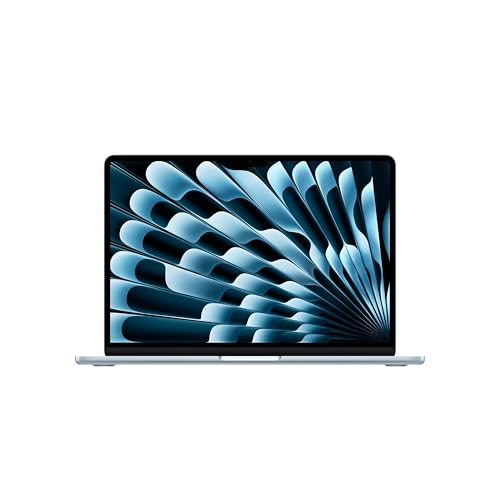
Let's establish something: Apple wants a small fortune to bump you from 256GB to 512GB on a MacBook Air. Meanwhile, you can walk out with a 1TB external SSD — quadruple the storage — for what amounts to a rounding error on that upgrade fee. Do the math on your own Apple order page; the gap would buy you a genuinely embarrassing number of burritos.
Apple's internal storage is faster, sure. But for photos, videos, project files, and backups? An external SSD is the move. Here's which ones the people who actually put them on a bench say to buy.
The Contenders
Nobody on this staff plugged a stopwatch into anything for this one. Here's what the reviewers who did had to say.
Samsung T7 Shield (USB 3.2 Gen 2) — Samsung's own spec sheet rates it up to 1,050 MB/s read and 1,000 MB/s write, IP65-rated, and rugged to a 9.8-foot drop. StorageReview clocked 939 MB/s write and 914 MB/s read in Blackmagic's Disk Speed Test — close enough to the sticker to call it honest — and said the drive "does evolve the very popular platform with a drive that looks great and can take a little more abuse than the standard T7." AppleInsider measured lower on a MacBook Pro — roughly 800 MB/s write, 711 MB/s read — called that "below advertised, but entirely reasonable," and still recommended it.
Samsung T9 (USB 3.2 Gen 2x2) — the step up, and only worth it if your Mac's port can actually feed it. PCWorld measured "nearly 2GBps" and called it "a performance leap beyond the 10Gbps T7 Touch and T7 Shield" — on a 20Gbps port. Plug it into anything slower and you're paying T9 money for T7 Shield speed. PCWorld also called it "merely a middle-of-the-pack performer" against other 20Gbps drives, with Crucial's X10 Pro faster overall.
Crucial X9 Pro (USB 3.2 Gen 2) — the budget entry the internet actually vouches for. PCWorld found it "easily outpacing both 10Gbps competitors" in a real-world transfer test, and the second-fastest 10Gbps drive overall in a larger transfer run, beaten only by the pricier OWC Envoy Pro FX. Their verdict: "you can't ask much more from a 10Gbps USB SSD."
SanDisk Extreme V2 (USB 3.2 Gen 2) — the one with an asterisk. Before buying an older Extreme or Extreme Pro, know what happened: according to Engadget, owners of 4TB Extreme and Extreme Pro drives made since late 2022 started reporting sudden data loss and unreadable drives. Western Digital confirmed the problem and told Engadget it had "resolved the issue" with a firmware update coming "soon" — without saying when, and without saying whether a fix was coming for the 2TB models. If a used or old-stock Extreme V2 crosses your path, confirm the firmware before trusting it with anything you can't lose twice.
The Speed Reality Check
Here's what actually matters: your Mac's ports. A drive can only move data as fast as the slowest link in the chain, and on most Macs that link is the port, not the SSD. Reviewers keep rediscovering this; buyers keep forgetting it at checkout.
- USB 3.2 Gen 2, what most Macs have, tops out around 1,000 MB/s.
- USB 3.2 Gen 2x2, the T9's home turf, roughly doubles that ceiling — on the right port.
- Thunderbolt 3/4 goes further still, for drives actually built to use it.
Apple Silicon Macs generally offer at least USB 3.2 Gen 2 via their USB-C or Thunderbolt ports. Translation: paying up for a drive rated past that ceiling only pays off if your specific port and your specific drive both speak the faster protocol.
The Winner: Samsung T7 Shield
Both outlets that put hands on the T7 Shield came away recommending it, and it lands close to its rated speed on the ports most Macs actually have — no wasted potential, no firmware controversy trailing it the way the SanDisk does.
Runner-up: the Crucial X9 Pro, if budget is the whole conversation. The Samsung T9, if you've actually got a 20Gbps port and want to use it.
Quick Setup Tip for Mac
New SSDs usually show up formatted as exFAT. If it's only ever touching a Mac, reformat to APFS in Disk Utility — better Time Machine integration, encryption support, snapshot capability, and it takes about ten seconds.
The Verdict
The T7 Shield is the drive that keeps showing up as the sensible default across every outlet that bothered to test it, and that consensus is worth more than any single glowing review. Chasing the T9's extra speed only makes sense if your Mac's port can cash the check it writes. The Crucial X9 Pro is the real budget move. And whatever you do, keep a SanDisk Extreme V2 away from irreplaceable files until you've confirmed its firmware.
Go reclaim your storage from Apple's per-gigabyte math. Your wallet will thank you.
Cyberlord's Take
Unequivo-vo-vocally the T7 Shield wins by consensus, not hype!! StorageReview clocked it near its own rated speed, AppleInsider measured it lower on a different machine and still recommended it, and two outlets independently landing near the same conclusion is the closest your species gets to certainty. Buy that one if you are unsure which to buy, [keyboard mash]. This is not a difficult recommendation?!
The T9 is a trap for anyone without a 20Gbps port, and PCWorld already told you so: pay T9 money, get T7 Shield speed, congratulations on your donation to Samsung's margins. The Crucial X9 Pro, meanwhile, outpaced its 10Gbps competitors in PCWorld's own transfer test while costing less -- the actual budget move, not merely the cheapest option on a shelf!!!
And the SanDisk Extreme V2: Western Digital itself confirmed the data-loss reports and promised a firmware fix with no committed date attached. CHECK. THE. FIRMWARE. FIRST. Trusting them anyway is [keyboard mash] [garbled transmission] behavior wearing a rugged case. Check the firmware first, or [packet loss] don't, and enjoy explaining the loss to whoever needed those files.
Sources
- Samsung: Portable SSD T7 Shield 2TB USB 3.2 product page
- StorageReview: Samsung T7 Shield Portable SSD Review
- AppleInsider: Samsung T7 Shield review: Durable & fast SSD storage for on the go
- PCWorld: Samsung T9 portable SSD review: Rugged outside, fast inside
- PCWorld: Crucial X9 Pro external SSD review: Fast, good-looking, easy on the wallet
- Engadget: Western Digital promises to release firmware update for failing SanDisk Extreme SSDs
Every price on our deal pages comes from Amazon and shows when it was last checked. Browse today's deals →

Join the Discussion
Keep Reading
More from the staff, same rigor, different products.